Device Profiles
The Device Profiles area allows Patch Administrators and System Owners to create and edit hardware device profiles that can be used to track and compare against hardware ports, protocols, and services found during patch scans or uploaded via the PPSM upload feature.
Device Profiles contain a title and description, then a list of ports/protocols/services approved for use for that profile. The profiles are used within the System Packages and then matched with reports to show valid and invalid PPS entries for machines based on scan results.
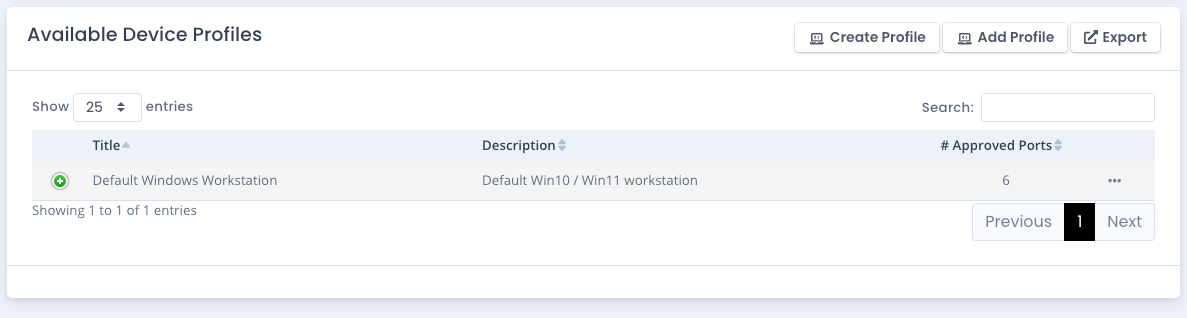
Creating and Editing a Device Profile
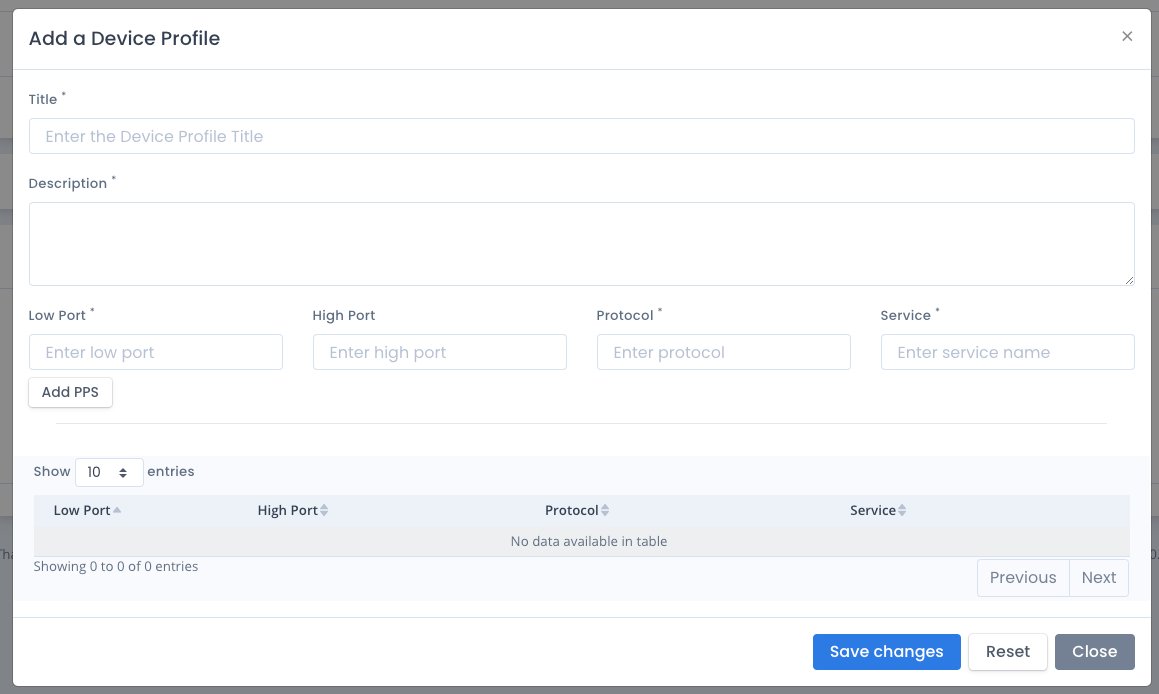
To create a new Device Profile for this System Package you click the Create Device Profile button. Enter a title, description, then 1 or more port/protocol/service (PPS)combinations.
The high port is not required but the other fields are when adding PPS records.
When done click the Save button.
To edit a Device Profile already listed, click the ... menu and choose Edit from the popup menu. Edit the information and save the changes.
Adding an Available Device Profile
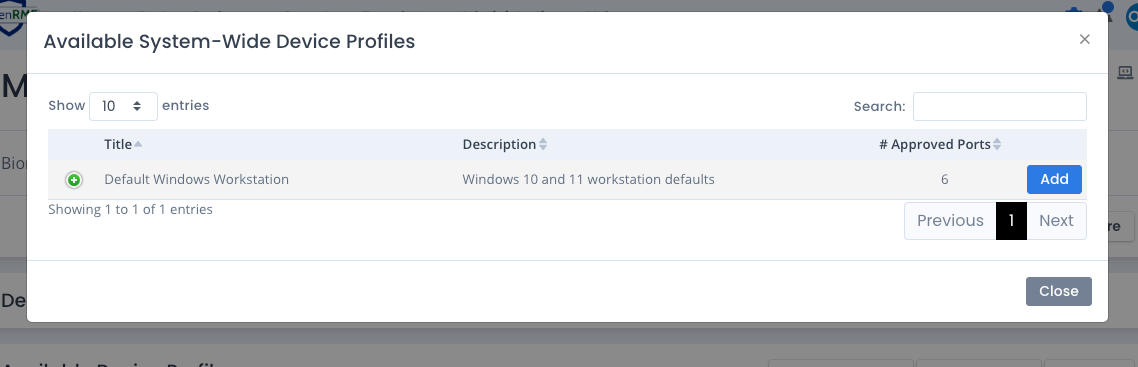
If there are any system-wide Device Profiles made at the Administration level, you can add those directly into your application. Click the Add Profile button and a list is displayed showing those profiles. Click the Add button to copy them into your system package.
If you edit any device profile added from the system-wide list, it only edits your local copy of that information in your system package. It does not edit the Administration level one. Likewise, if any Administration level device profile is edited, it only is edited at that level.
Uploading Device Profiles
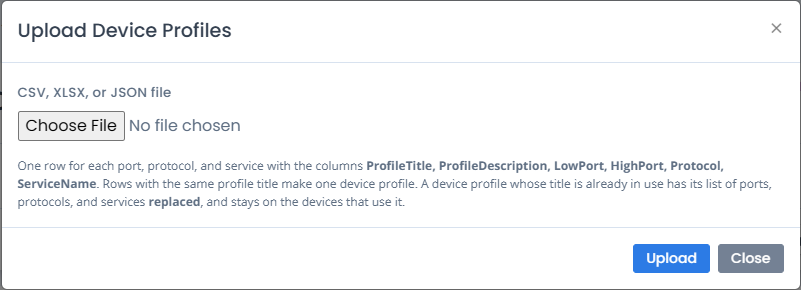
You can also load one or more Device Profiles into the System Package from a file. Click the Upload button, choose a CSV, XLSX, or JSON file and click Upload. The file has one row for each port/protocol/service with these columns, in this order:
ProfileTitle, ProfileDescription, LowPort, HighPort, Protocol, ServiceName
Rows with the same profile title make one Device Profile. The high port can be left blank. A sample file is available to start from, and the Download button gives you an XLSX with an Import sheet in this same layout, so you can download, edit, and upload the result back in.
If a Device Profile with the same title already exists in this System Package, its list of ports, protocols, and services is replaced with the rows in the file. The profile keeps its identity, so any hardware using it keeps using it.
Rows that cannot be used, such as a port that is not a number or a missing protocol, are skipped and the upload tells you the row number and the reason for each one. The rest of the file is still loaded.
To replace only the ports, protocols, and services of one Device Profile, click its ... menu and choose Upload PPS List. That file has one row per entry with the columns LowPort, HighPort, Protocol, ServiceName (sample file). The title and description are left as they are.
How Device Profiles are Used
These device profiles are used to match devices/hosts to the approved listing of ports, protocols and services. A device can have more than one Device Profile, for example a Web Server profile and a Database Server profile on the same host, and the approved listing for that device is then the combined list from all of its profiles. You set the profiles on a device from its Edit form on the hardware listing, or on several devices at once with the bulk options.
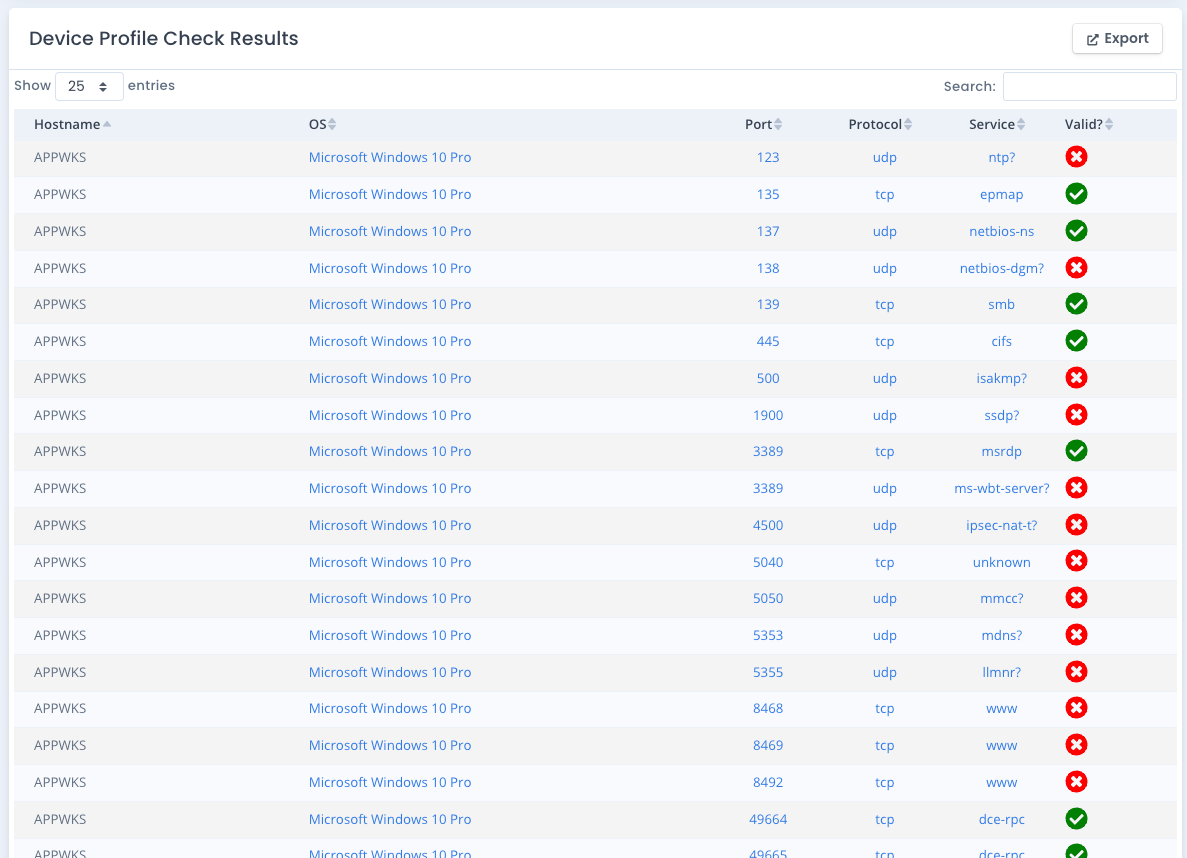
There is a specific “Device Profile PPS Check” report in the available reports that lets you list all devices matched to profiles and show if the port/protocol/service combination matches to the approved listing or not. An example is shown below.
This report can be run to show those PPS entries that are compliant as you manage your System Package. It also can be run to understand what PPS entries should match your profiles and edit your profiles as well.